Sector F Linux
Sector F Linux is a desktop operating system from Sector F Labs: Fedora's bootc image with the Patina desktop, on Btrfs. One OS for the laptop and the workstation, with Fedora's current kernel and packages.
It is built on rpm-ostree and OSTree, the technology under Fedora Silverblue, CoreOS and bootc images: the system is built once from a Containerfile and shipped whole as an image, and /usr is read-only. An update stages the next image beside the running one and boots into it at the next restart, and a rollback is booting the previous one. Updates come from ghcr.io/sector-f-labs/sector-f-linux, and Software Update, an app in the OS, runs them.
make help      the targets
make build     build the desktop and the image (local only)
make publish   push the image to ghcr.io, the only thing that leaves this machine
make iso       build the installer ISO from the published image
make disk      install the image onto a fresh disk file for the test VM
make run       boot the VM (installs the image first if there is no disk)
What we built for it
Three small Patina apps sit around the image, each with a mock mode that makes the screenshots below (make screenshot in its folder).
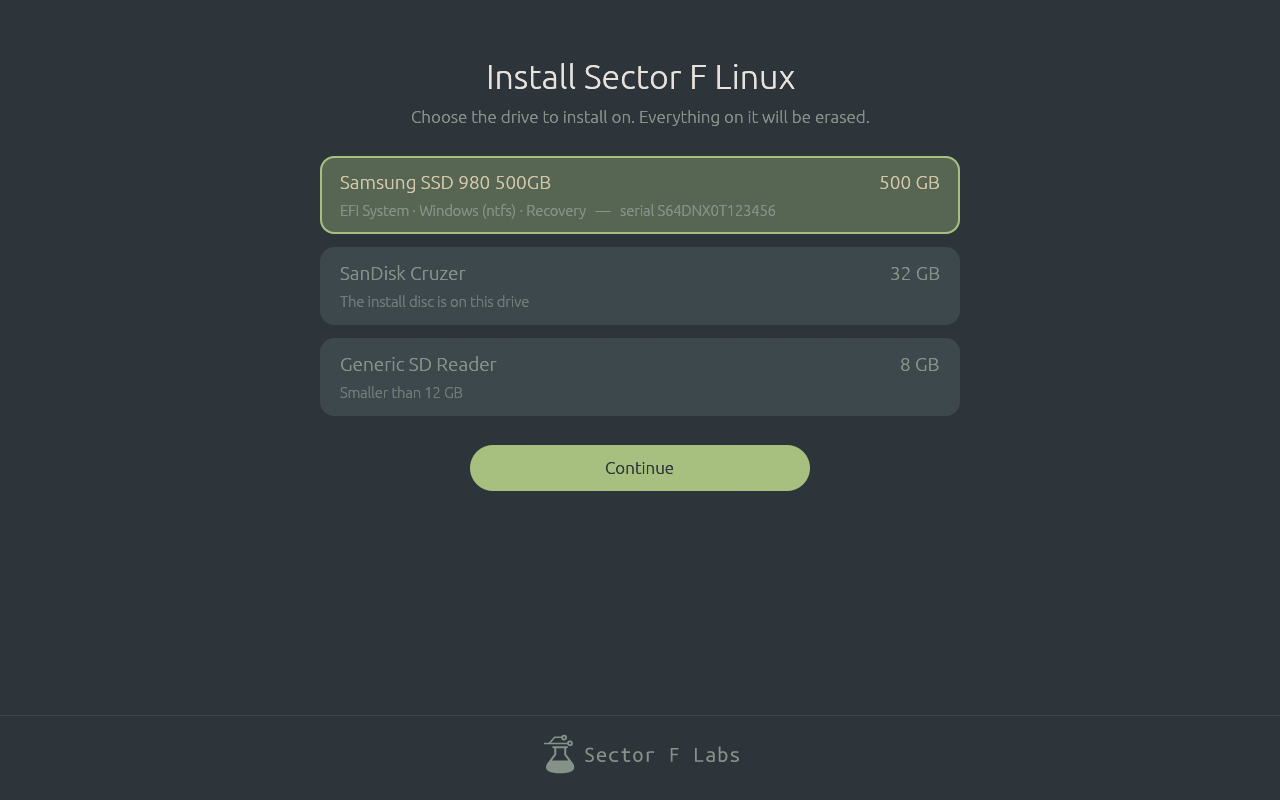
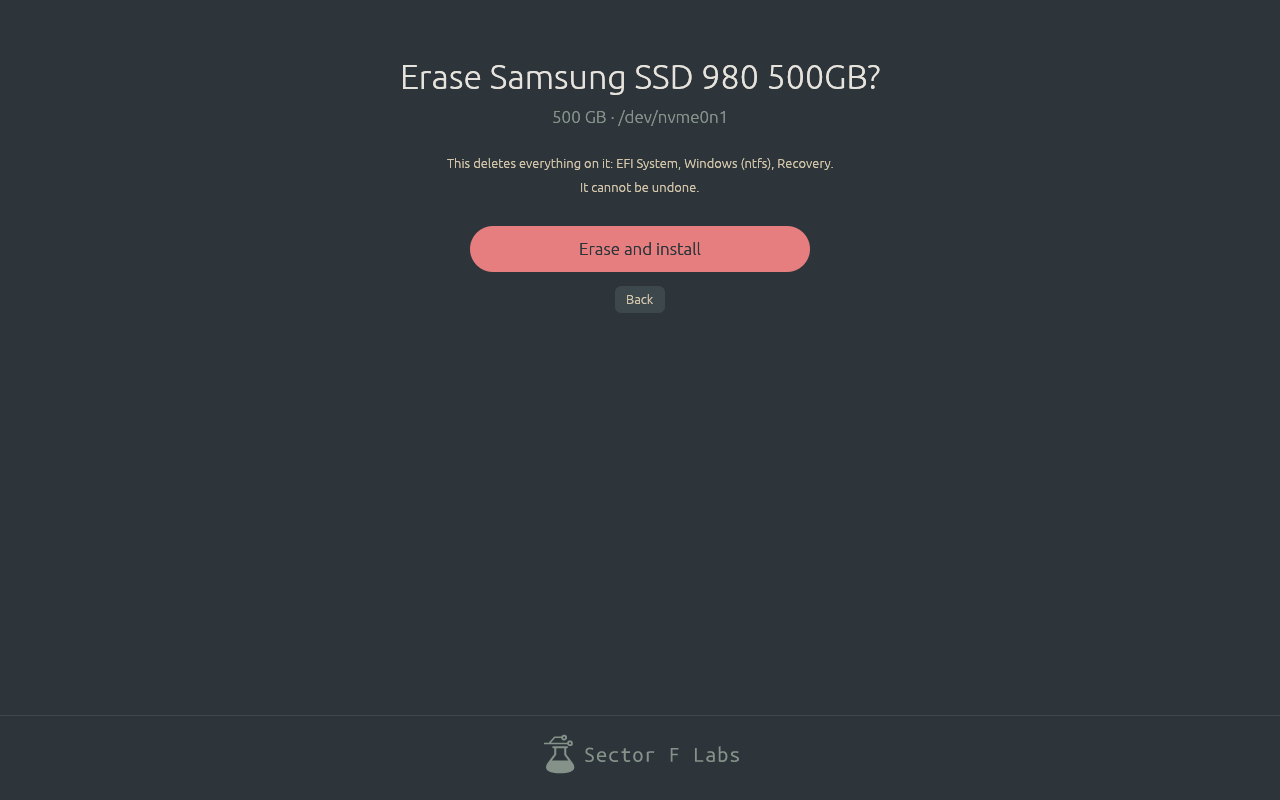
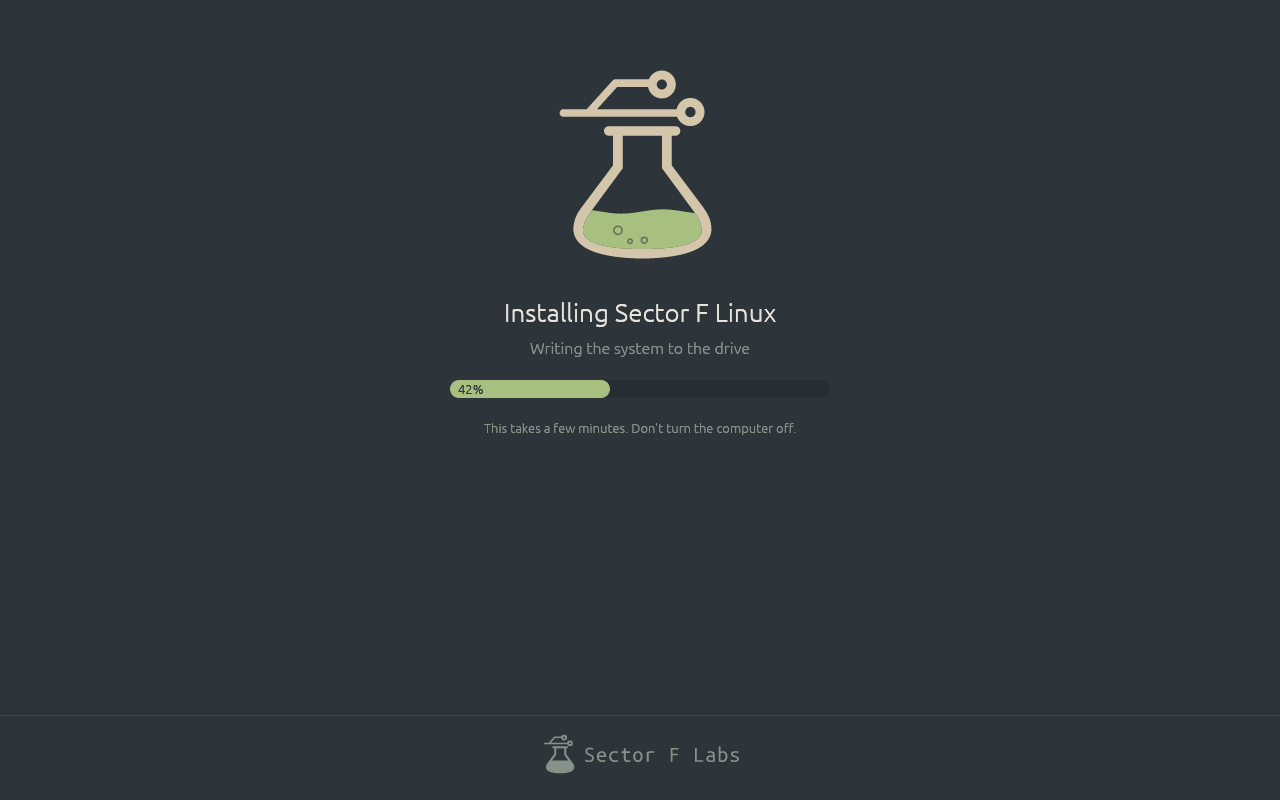
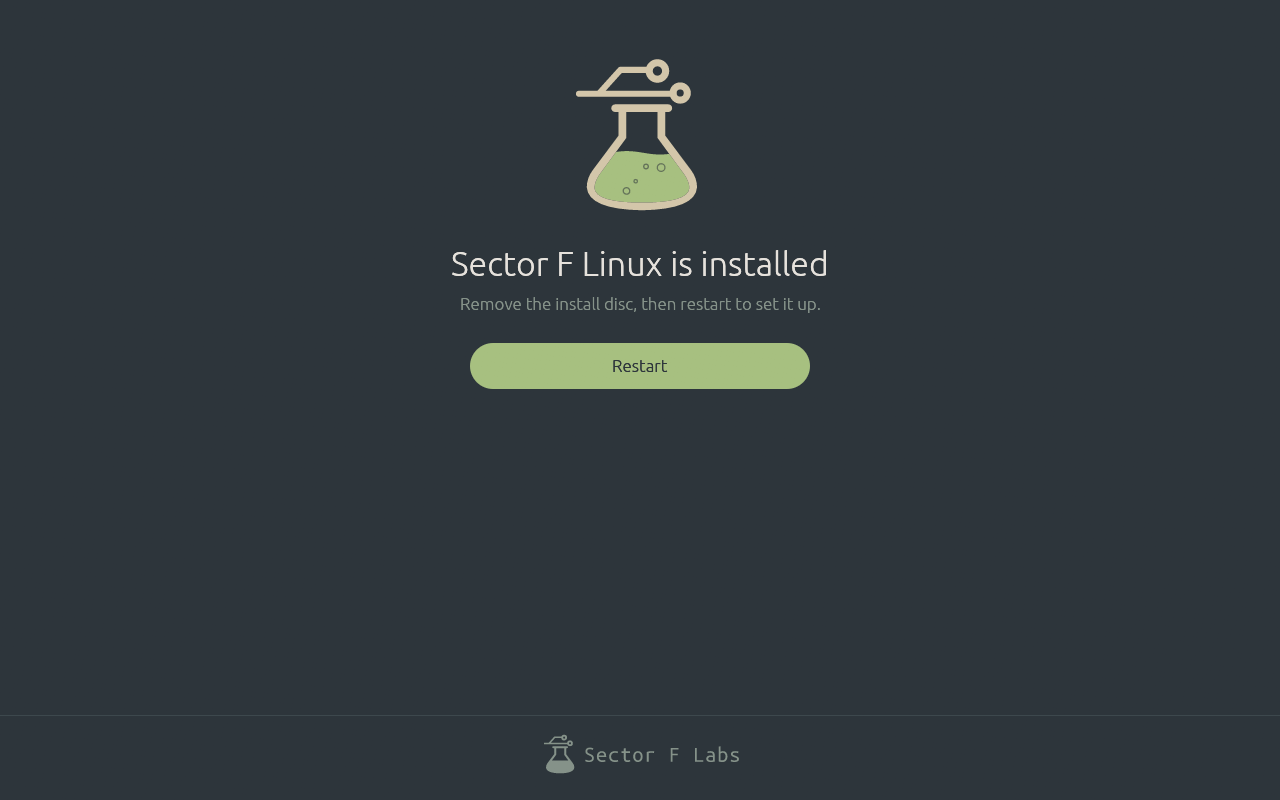
The installer (installer/) runs from the live ISO: pick a drive, confirm, wait for the flask.

| Choose a drive | Confirm | Installing | Done |
|---|---|---|---|
 |
 |
 |
 |
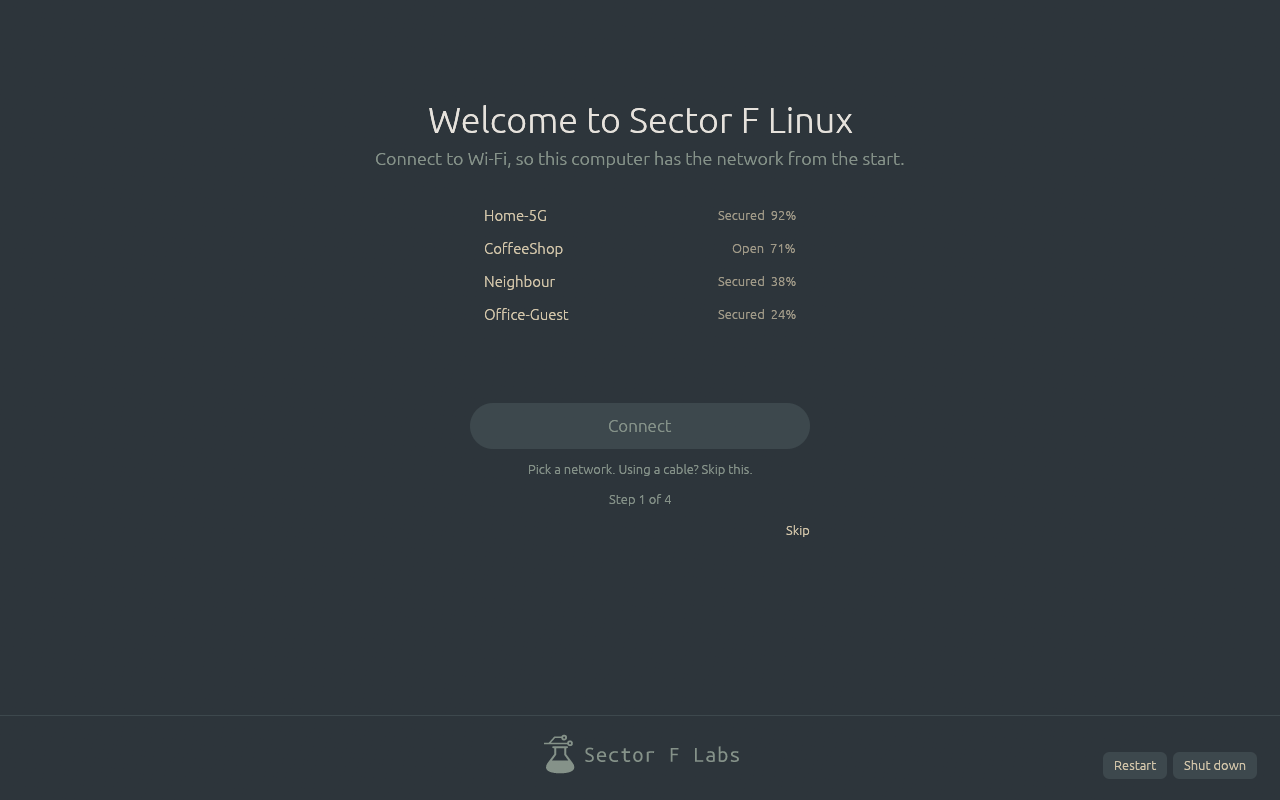
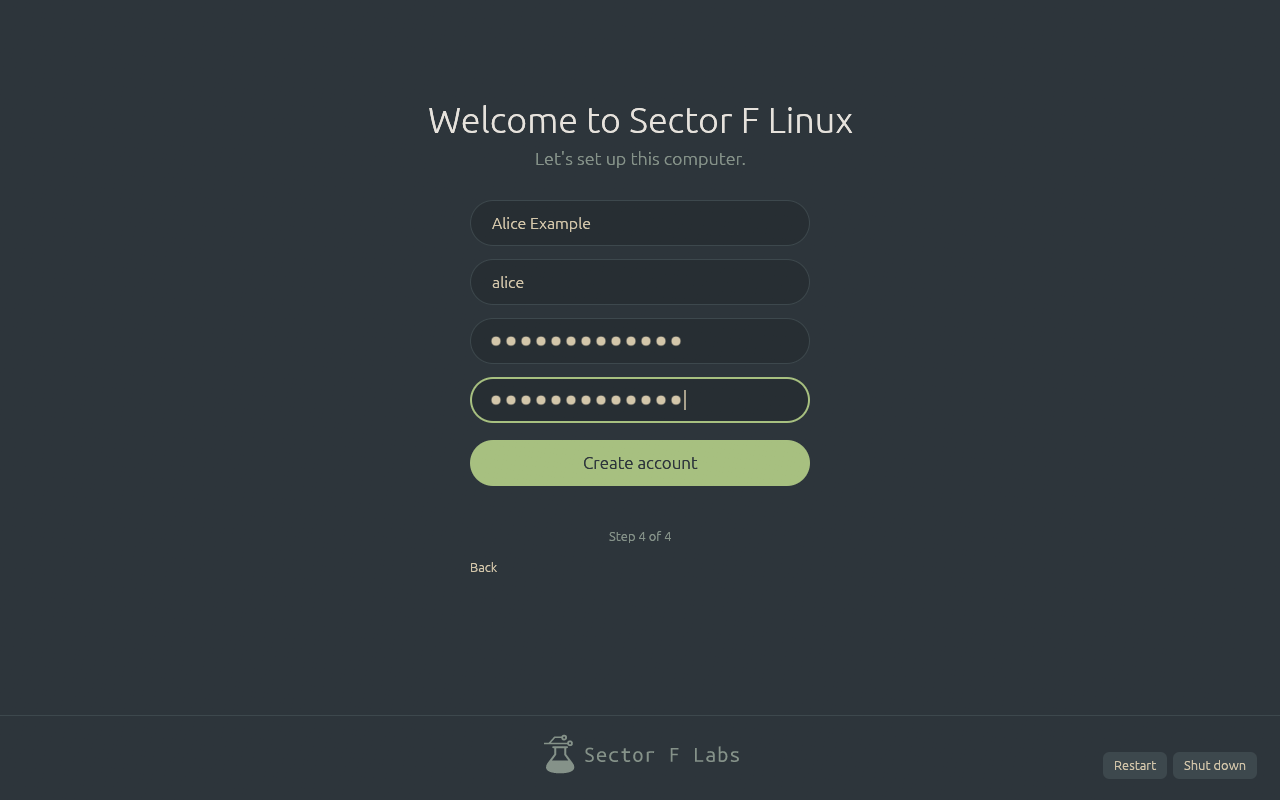
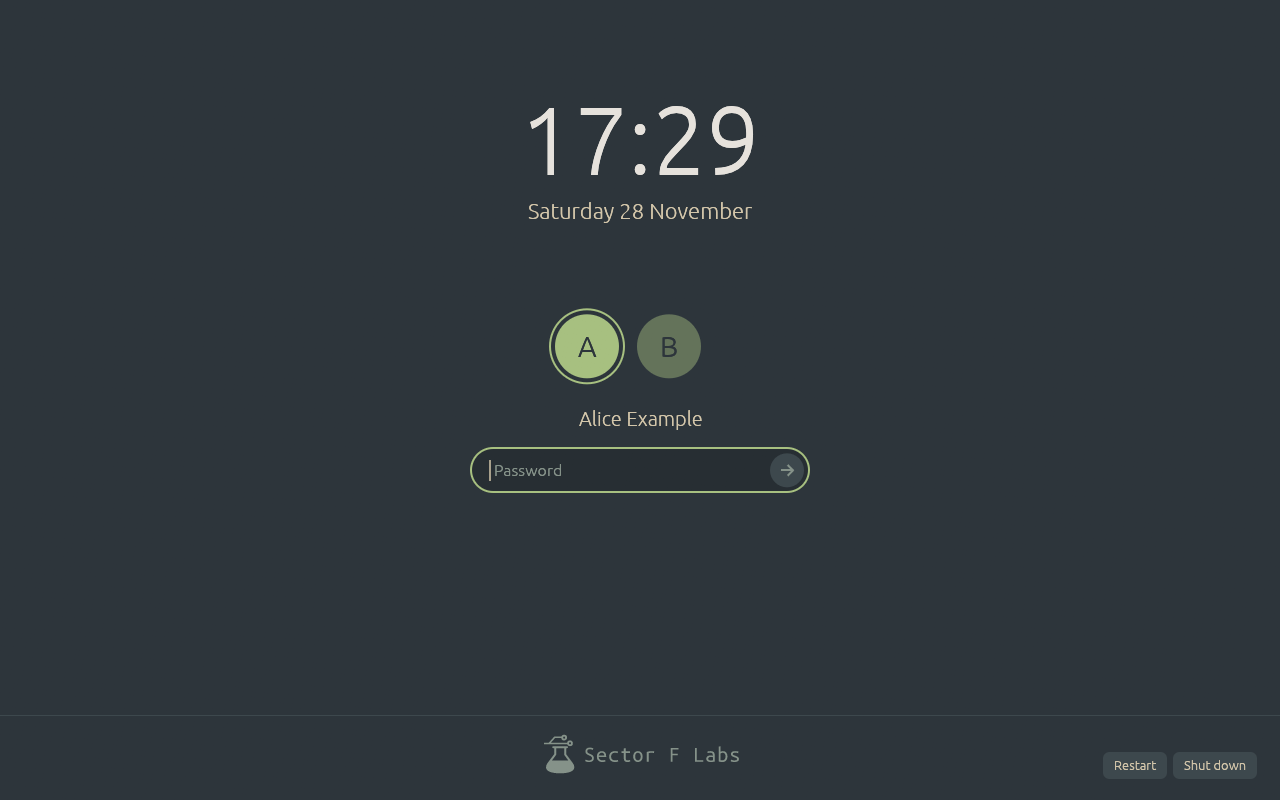
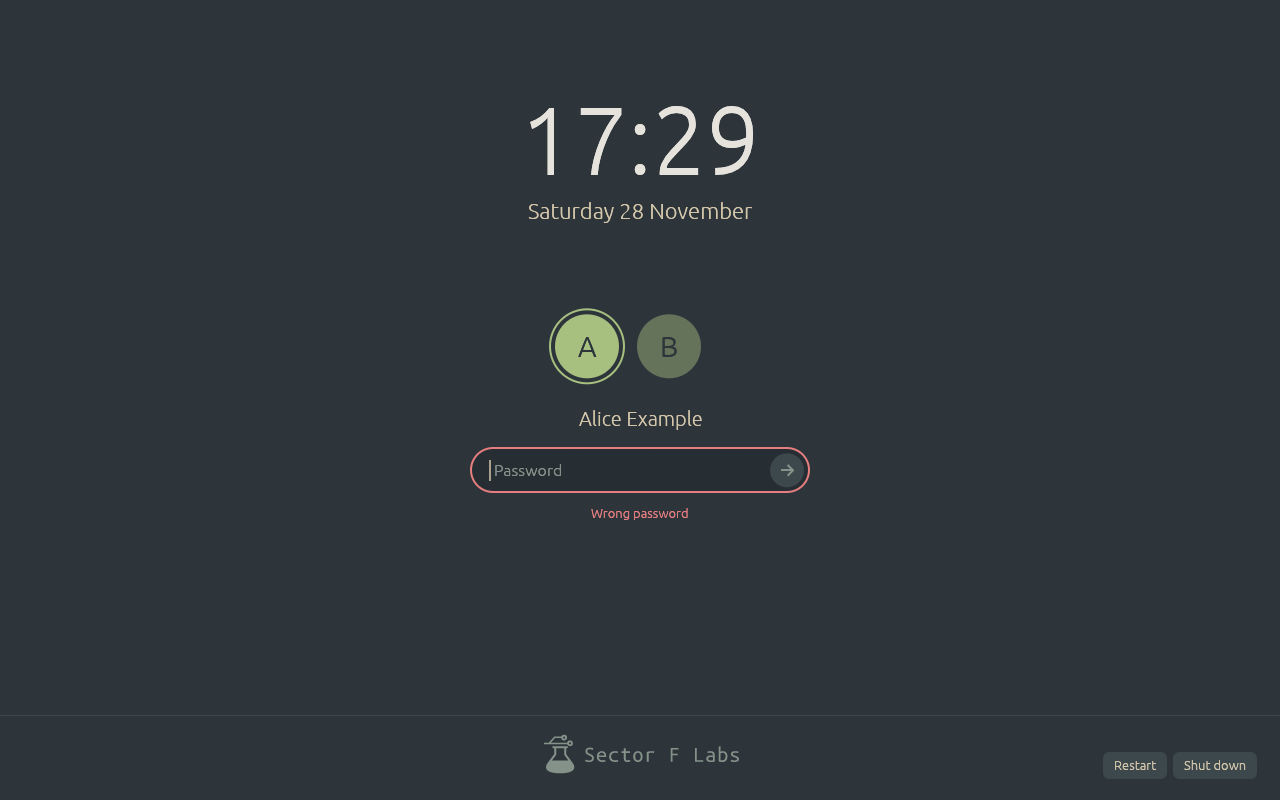
The greeter and first-run setup (greeter/) is the login screen, and on a new machine the wizard that comes first: Wi-Fi, clock, computer name, then your account.
| Setup: Wi-Fi | Setup: account | Login | Wrong password |
|---|---|---|---|
 |
 |
 |
 |
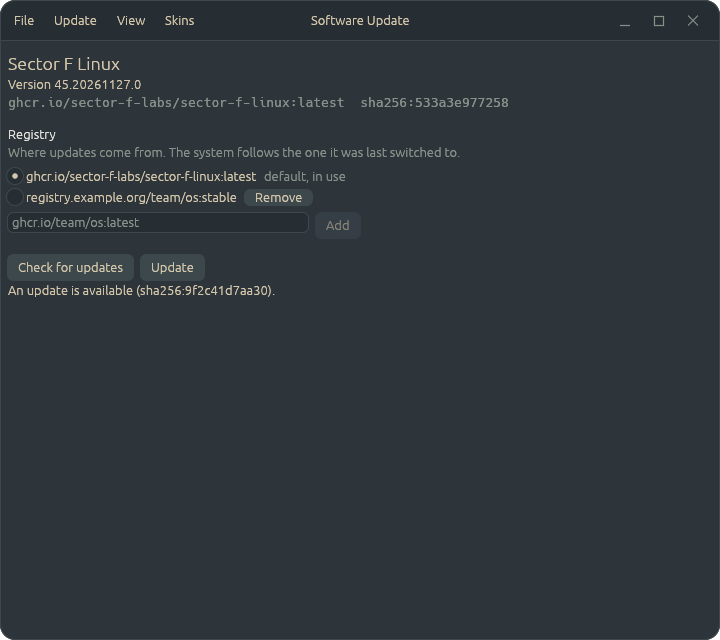
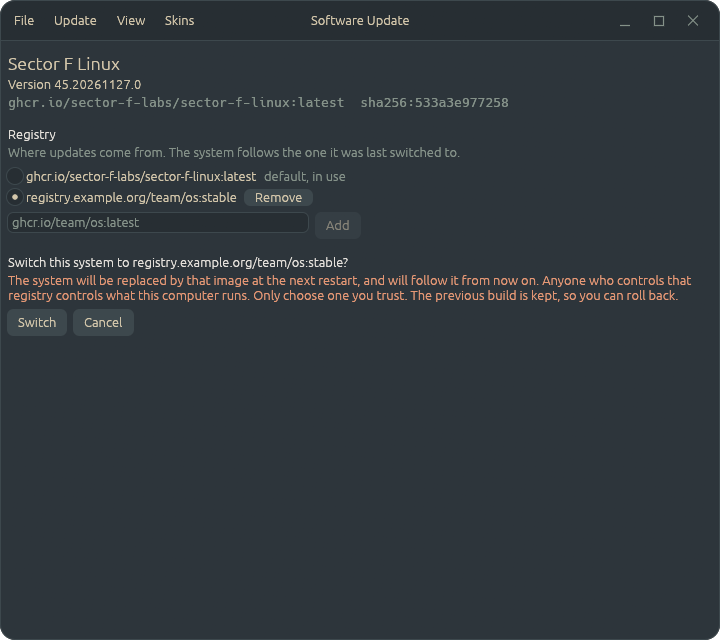
The updater (updater/) is Software Update: it follows the image on ghcr.io/sector-f-labs/sector-f-linux, stages the next one beside the running system and switches at the next restart.
| Update available | Switching |
|---|---|
 |
 |
Principles
- The system can always go back. An update is a new image, staged beside the running one and booted at the next restart, with the previous one kept for rollback (
rpm-ostree rollback)./usris read-only. - Stock Fedora, nothing to maintain. The base provides the kernel and the packages; we choose and arrange them in a Containerfile. Hardware drivers and services go in the image.
- What users add stays out of the way. Layered packages (
rpm-ostree install) survive updates, apps can be Flatpaks or containers, and~/Apps/Name.appis a folder with anapp.tomlsaying how to run it: copy it in to install, delete it to uninstall, never touch the system (ADR-0002, ADR-0005). - Update with
rpm-ostree upgrade.bootc upgraderefuses once a package is layered; rpm-ostree upgrades the image and keeps the layer (ADR-0009). - Opinionated. One desktop (Patina), one filesystem (Btrfs).
History
The project was called Patina OS, and the repository, image and volume names inside still say patina-os in places until a rename pass. It began as a search for the base that makes the simplest image-based OS for the Patina desktop: FreeBSD and Ubuntu on ZFS were tried first, and Fedora's bootc image on Btrfs won once ZFS was dropped (ADR-0009). docs/comparison.md and docs/adr keep the record, and docs/notes.md the research behind it.
License
GPL-2.0, see LICENSE.